How do you determine when to replace a stylus?

krellmk

Chief Journeyman
Joined
Nov 3, 2016
Messages
741
Location
Brooklyn NY
Tagline
Are you satisfied with the life you're living
Is there a way to physically determine when a needle is worn, or do you have to rely only upon your ears?

 
I was just reading on this topic at vinyl engine.

I had a link to another site open but now it’s closed.

But basically, once you can hear it, it may be too late.

What I got out of it was 300-400 hours you already have wear. Oddly enough not even cartridge manufacturers agree on a time line.

I think it was Ortophon that said 1000 hours but the author called them and they verbally said 3-400…

It makes me rethink my Benz-Micro silver because it has to be exchanged (or Re tipped independently) and is about due for me- probably overdue…

With a MM you can keep new stylus’ on hand and swap to check condition.
 
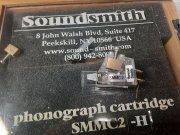
Dunno if i should send this SMMC2 cartridge back to Soundsmith or just downgrade to MM
 

Attachments

  • 20220131_075508.jpg
    20220131_075508.jpg
    1 MB · Views: 9
Asking about tire wear and then thinking the one you got might not be the good one or just looking for easy refresh?

First, I'm a firm believer in using the best cartridge you can afford and understand it is a cost of doing business...electricity, wear on tape heads, wear on styli and such just gotta be paid for to have the enjoyment of great tunes.

Second, stylus wear is easily determined...with the proper test equipment, a stylus microscope and a trained observer. When a stylus is audibly worn folks say it is already past the point of possibly damaging the grooves. More when someone uses to little tracking force. You might find a local Hi-Fi store that has a stylus microscope...oh sorry, I live within 12 miles of a dealership so equipped and there are others in the area, brick and mortar stores but I don't know if they have scopes or not. I need a scope, I learned to read styli back in the day at the store where I worked.

I haven't heard the SMMC-2 but I suspect it is a most excellent sounding nail. The one B&O I heard in that line was nice worth a retip.

Then we get to the cost of the stylus wear. At a 1000 hours, kinda long but not out of the realm of possibilities, a really nice cartridge might cost the owner a buck per album side. This ranges from nothing (for a cartridge I would not want to have) to about 5 bucks for some of the most expensive cartridges. But those really expensive ones can be refreshed for half a grand or less for a great new nail. It won't be the exact same sound as a new cartridge (usual way a manufacturer will 'retip' a non-replaceable stylus for half of original cost) but it will be very good sound. So get a great cartridge and wear it out and then get it retipped by the folks around the world that do this for any number of brands.

So yes there is a way to determine stylus wear, using a dedicated microscope
and
No don't send the B&O back unless you insist on an easily replaced stylus and some MM cartridge.
 
Asking about tire wear and then thinking the one you got might not be the good one or just looking for easy refresh?

First, I'm a firm believer in using the best cartridge you can afford and understand it is a cost of doing business...electricity, wear on tape heads, wear on styli and such just gotta be paid for to have the enjoyment of great tunes.

Second, stylus wear is easily determined...with the proper test equipment, a stylus microscope and a trained observer. When a stylus is audibly worn folks say it is already past the point of possibly damaging the grooves. More when someone uses to little tracking force. You might find a local Hi-Fi store that has a stylus microscope...oh sorry, I live within 12 miles of a dealership so equipped and there are others in the area, brick and mortar stores but I don't know if they have scopes or not. I need a scope, I learned to read styli back in the day at the store where I worked.

I haven't heard the SMMC-2 but I suspect it is a most excellent sounding nail. The one B&O I heard in that line was nice worth a retip.

Then we get to the cost of the stylus wear. At a 1000 hours, kinda long but not out of the realm of possibilities, a really nice cartridge might cost the owner a buck per album side. This ranges from nothing (for a cartridge I would not want to have) to about 5 bucks for some of the most expensive cartridges. But those really expensive ones can be refreshed for half a grand or less for a great new nail. It won't be the exact same sound as a new cartridge (usual way a manufacturer will 'retip' a non-replaceable stylus for half of original cost) but it will be very good sound. So get a great cartridge and wear it out and then get it retipped by the folks around the world that do this for any number of brands.

So yes there is a way to determine stylus wear, using a dedicated microscope
and
No don't send the B&O back unless you insist on an easily replaced stylus and some MM cartridge.
So I am curious, would any decent microscope work, or is there something special just for stylus?
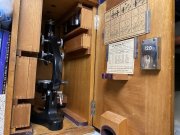
A good vintage microscope can be had for $300 to $600 and would not be a huge investment for guys who spend a grand on just a cart.
 
Look at USB microscopes on our favorite auction site. They're cheap and plug right into your computer.
True, I have several vintage scopes already and have looked at most of my cart’s but I don’t really know what I am looking at, I can tell if the diamonds are missing obviously but since all but one are used I can’t tell what they are supposed to look like unless I could compare them with the exact same new one. Was more curious if there was a specific type of scope such as a stereoscopic or something like that.
 
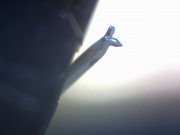
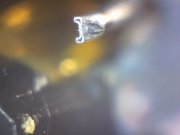
And all needle shapes are not the same. Maybe there is a good website with photos. Here is a photo of a Shure M91E Hi Track with a broken stylus and a photo of a cheap replacement stylus. This particular USB microscope is 10 years old, new ones should be much better.
 

Attachments

  • WIN_20220131_08_56_07_Pro.jpg
    WIN_20220131_08_56_07_Pro.jpg
    74.3 KB · Views: 14
  • WIN_20220131_09_06_21_Pro.jpg
    WIN_20220131_09_06_21_Pro.jpg
    40.3 KB · Views: 14
  • WIN_20220131_09_36_59_Pro.jpg
    WIN_20220131_09_36_59_Pro.jpg
    55.8 KB · Views: 14
More when someone uses to little tracking force.

I have read it again. It seems that using lower VTF can result in groove/stylus excessive wear, when someone would expect the opposite. To my ears, using too little force affects the sound badly, too. So, I always track my stylii near their upper force limit.

When I had been given my TTs, one's stylus was sounding good enough. It didn't lacked any highs. The only problem was a balance difference of something above a dB (or higher? I don't really remember). But when I replaced it I heard the difference with the new. It was night and day. It was then that I checked the old stylus under magnification and the wear was easily seen, especially on the defective channel. This stylus had huge mileage under wrong VTF or wrong antiskating adjustment. So, I echo the opinion that when it's heard, it's too late.

On the other hand, not everyone is familiar with observing a tip or having a suitable microscope. Expensive cartridges users can justify obtaining and learning to use a scope. But the "lesser" users (as me) can't, won't or don't use it or any other equipment. The best bet then, is to follow the manufacturer's guidelines. If not such, then... I truly don't know!
 
Last edited:
Look at USB microscopes on our favorite auction site. They're cheap and plug right into your computer.
And you will have a nice magnification of the dirt and a totally useless device for evaluating stylus wear.

On a diamond tip the size of this caret ^ the wear spot would be 1/10 the size of a period and there are two of them, one on each side of the diamond. These will vary in size because no one uses the exactly correct antiskate leading to more wear on the inside or outside of the nail

Sparky's stylus microscope: https://audiokarma.org/forums/index.php?threads/sparkys-fabulous-diy-stylus-microscope.225960/

There are a few stylus microscopes that show up, early shure, never used one, later Shure SEK-2 and another one that allowed rotation of the nail, generally along the axis of the cantilever to evaluate those wear dots.

The wear dots, the flats from being worn by the record, when magnified to 200x become large enough to need to refocus to see the full pattern. The depth of field is so short the whole dot won't fit in the field of a worn stylus. These wear patterns need side lighting so look over the thread and learn what you need. A new stylus will have two point sources of light since there is no flat, just reflection of the light off the diamond.

Searching for info on the Shure or stylus wear pictures will bring up a number. I'm not going to do it but would comment on ones posted if there are questions.
 
Last edited:
Once folks understand what they need to see to evaluate stylus wear, it changes the goals of the magnification system and lighting. Most just don't understand how small the wear spots are. But looking at the needle in the groove...it is obvious it will need good quality magnification.
 
Some microscopes will work just fine but there needs to be room under the optics to the top of the viewing table to allow a cartridge or a stylus to be put into position. Many 'scopes for slides do not have this room to accommodate the cartridge.

200x is the one to use for proper viewing, maybe 100x to locate the stylus in the viewfinder. Be careful with any units not designed to be used for cartridges as rotating the nosepiece might present a much longer objective lens to the cartridge.
 
Spence, you sound interested enough in all this that I figure you would interested in watching this lecture by Mr. Ledermann:


I know it's kinda long, but it actually flies by due to his depth of knowledge. I got more out of this than the last 50+ Meet The Press shows combined -- the signal/noise ratio is simply that much better here. :0)

3D
Very interesting, thanks for that.
 
Back
Top